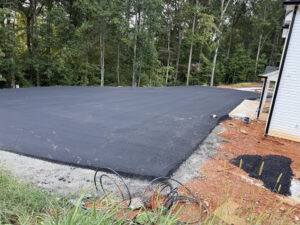
Roadway drainage and base preparation determine whether pavement has stable support or begins deteriorating from below. Asphalt and concrete surfaces can appear strong when first installed, but neither material performs independently. The pavement relies on properly graded soil, a stable aggregate layer, controlled water movement, appropriate thickness, sound construction practices, and maintenance that prevents moisture from entering vulnerable areas.
When a roadway develops repeated potholes, settlement, edge failure, pumping, rutting, or widespread cracking, the visible damage may signal problems beneath the surface. Placing new material over unresolved drainage or base conditions can temporarily improve appearance without correcting the cause. This guide explains how supporting layers and water management affect performance and what owners should evaluate before selecting a repair.
Pavement Is a Layered Structural System
A roadway distributes vehicle loads through multiple layers. The exact design varies, but a typical flexible pavement system includes asphalt over an aggregate base supported by prepared subgrade soil. Concrete pavement is more rigid, yet it still requires uniform support, drainage, joints, and appropriate base or subbase preparation.
The surface resists traffic wear and weather. The aggregate base spreads loads, creates a working platform, and supports drainage or frost-related design needs when applicable. The subgrade forms the foundation. If a lower layer moves, loses strength, traps water, or varies substantially across the project, the surface above it may crack or deform.
That is why professional paving and roadway construction begins with the site rather than the color or appearance of the finished surface.
How Water Damages a Roadway
Water can reach a pavement system from rainfall, surface runoff, overflowing inlets, leaking utilities, groundwater, adjacent slopes, irrigation, or drainage outlets that do not function properly. Once present, water can soften certain soils, reduce bearing strength, wash away fine particles, contaminate aggregate, contribute to erosion, and move through cracks or joints.
Traffic makes the problem worse. Vehicle loads repeatedly compress and flex weakened areas. Water and fine material may be pumped through cracks. Depressions collect more runoff, allowing the cycle to continue. A small drainage problem can gradually become a structural repair.
Georgia’s rainfall and development patterns make water management a central planning issue. Roadways often receive runoff from roofs, parking lots, slopes, sidewalks, and upstream property. The drainage system must account for how the surrounding site directs water, not only what falls directly on the pavement.
Surface Drainage Versus Subsurface Drainage
Surface drainage moves water off and away from the roadway. Cross slope, longitudinal grade, crowned sections, curb and gutter, shoulders, swales, inlets, flumes, ditches, culverts, and outlets may all participate. Water should not remain in wheel paths, against pavement edges, or at low points without a functioning collection route.
Subsurface drainage addresses water within or beneath the pavement structure. The design may rely on free-draining materials, underdrains, geotextiles, stabilized layers, protected outlets, or other project-specific measures. Not every road uses the same system. Soil, groundwater, pavement type, grade, surrounding development, and maintenance access influence the design.
The Georgia Department of Transportation provides detailed technical direction in its Drainage Design Policy Manual. Private, municipal, and development projects should follow their approved plans and applicable local requirements.
Signs of a Roadway Drainage Problem
- Standing water remains after surrounding areas have dried.
- Runoff crosses the roadway unexpectedly or carries sediment onto pavement.
- Pavement edges crumble beside saturated soil.
- Cracking or settlement repeatedly returns in the same location.
- Water emerges through joints, cracks, or the shoulder.
- Inlets bypass water, remain clogged, or sit above adjacent pavement.
- Ditches or swales erode, hold water, or discharge onto unstable slopes.
- Potholes form near low areas, utility cuts, or drainage structures.
These observations do not replace engineering evaluation, but they help define where investigation should begin. Photos taken during and after rainfall can provide useful information because a dry-day inspection may not reveal the active flow path.
What Is the Roadway Subgrade?
The subgrade is the prepared soil surface that supports the pavement layers. It may consist of existing soil, compacted fill, treated material, or approved replacement material. Subgrade strength and uniformity matter because abrupt changes can produce differential movement.
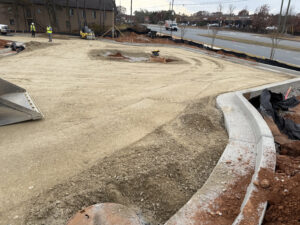
Preparation begins with correct elevation and slope. Crews remove unsuitable organic material, debris, or unstable soil as directed. Moisture is adjusted so the soil compacts effectively. Crews place fill in controlled lifts rather than as one deep layer. The surface is shaped and evaluated before installing aggregate.
Soil behavior varies. Clay-rich material may be sensitive to moisture. Loose fill can consolidate under traffic. Rock, old trenches, buried debris, or previously disturbed areas can create isolated hard and soft zones. Project-specific geotechnical information helps the design team determine appropriate treatment.
Why Proof Rolling Is Used
Proof rolling applies controlled loading to the prepared subgrade or base so the team can identify visible movement, rutting, pumping, or yielding areas. Equipment and procedures should follow project requirements. Proof rolling does not provide every property needed for design, but it can reveal localized instability before the next layer conceals it.
When an area moves excessively, the team evaluates the reason. The material may be too wet, insufficiently compacted, unsuitable, or affected by an underlying condition. Corrective work might include drying, recompaction, undercutting, replacement, stabilization, drainage correction, or another approved solution.
Building the Aggregate Base
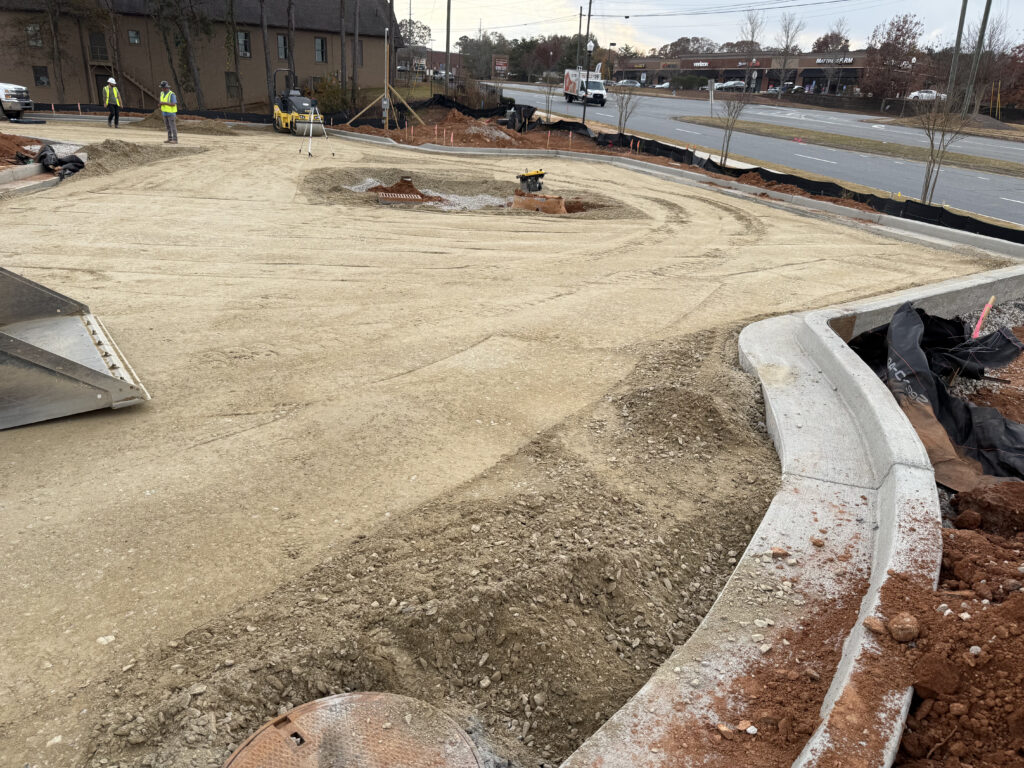
Select, place, grade, and compact the aggregate base to create a stable platform and distribute traffic loads. Material quality matters. Excessive fines, contamination, segregation, improper gradation, or inconsistent moisture can interfere with construction and performance.
Achieve the specified compacted thickness across the roadway, including edges and transitions. If the section is too thick to compact effectively in one operation, it may require multiple lifts. Shape and compact each lift before placing the next.
Line and grade checks confirm that the base will produce the required pavement elevations and cross slopes. Density or other acceptance testing may be required. The Federal Highway Administration maintains technical publications concerning compaction and pavement construction, while the contract documents determine the standards for an individual job.
Moisture and Compaction Must Work Together
Compaction rearranges soil or aggregate particles into a denser structure. Moisture influences how readily those particles move and lock together. Material that is far too wet may pump, rut, or move under equipment. Material that is too dry may resist achieving the required density.
Experienced crews observe the material and use testing when required. They adjust moisture, lift thickness, equipment, rolling pattern, and the number of passes to suit the project. Compaction should extend to edges, around structures, and across utility trenches. Narrow or confined areas may require specialized equipment.
Compaction records are valuable because pavement covers the work. Once asphalt or concrete is installed, correcting an unsupported area becomes more disruptive and expensive.
Utility Trenches Are Common Weak Points
Utility trenches interrupt existing soil and pavement layers. If bedding, backfill, moisture control, or compaction is inconsistent, the trench can settle differently from the adjacent roadway. Surface cracking may trace the utility alignment months or years later.
Coordination should define trench width, backfill materials, lift thickness, compaction methods, testing, and pavement restoration. Structures such as manholes, valves, and inlets must match final elevations. Drainage should not collect along the trench or around a structure.
Roadway Edges Need Support and Drainage
Pavement edges are vulnerable because they may receive turning loads while lacking support on one side. Water can also enter through edge cracks or collect where the shoulder is low. Proper shoulder construction, curb and gutter, aggregate backing, slope treatment, and drainage help protect the edge.
Drivers leaving the paved surface can break unsupported asphalt. Delivery trucks and construction traffic may produce concentrated edge loading. The design and construction plan should consider actual vehicle paths, not only the marked travel lane.
Why an Asphalt Overlay May Not Solve Base Failure
An overlay adds new asphalt to an existing surface. It can restore ride quality, provide a new wearing course, and address certain forms of surface deterioration when the underlying pavement remains structurally suitable. It does not automatically correct saturated soil, failed base, settlement, drainage deficiencies, or severe movement.
Cracks from below can reflect through new asphalt. Depressions may return as underlying layers continue moving. A responsible evaluation distinguishes surface distress from structural distress and identifies localized repairs, milling, drainage improvements, stabilization, or reconstruction needed before the overlay.
Read our pavement maintenance and resurfacing resources to compare repair approaches.
Questions to Ask Before Repairing Failed Pavement
- Does damage occur near a low point, inlet, shoulder, or utility trench?
- Does the area remain wet after rainfall?
- Has the same location been patched previously?
- Is cracking limited to the surface or accompanied by settlement and rutting?
- What traffic and vehicle loads use the area?
- Are pavement cores, testing, excavation, or drainage review appropriate?
- Will the proposed repair correct the cause or only cover the symptom?
- How will water be managed after construction?
Owners should provide plans, maintenance history, photos, utility information, and observations about rainfall or recurring damage. This context helps the project team determine the next step in the investigation.
Protecting the Base During Construction
A completed aggregate base is not indestructible. Rain, mud, hauling traffic, turning equipment, utility work, and unplanned stockpiles can damage the prepared surface. The construction sequence should minimize exposure and keep unsuitable traffic off accepted areas.
Before paving, crews correct disturbed locations, verify grade and drainage, remove contamination, and confirm that the surface meets project requirements. Paving over standing water, mud, loose material, or visible instability risks trapping a known problem beneath the finished surface.
Maintenance Helps Keep Water Out
After construction, maintenance protects the pavement system. Owners should keep inlets and outlets clear, address erosion, monitor settlement, maintain shoulders, evaluate cracks, and correct sources of uncontrolled runoff. Drainage structures should remain accessible for inspection and cleaning.
Not every crack requires the same treatment, and improper sealing can trap water or fail quickly. Maintenance decisions should reflect pavement type, crack condition, traffic, weather, and the underlying cause. Early attention is usually less disruptive than waiting for a pothole or widespread failure.
Roadway Drainage and Base Preparation FAQs
Can poor drainage cause potholes?
Yes. Water can weaken supporting layers and enter pavement defects. Repeated traffic loading then loosens the material and enlarges the damaged area. You may need to correct the drainage or base problem along with the surface repair.
How thick should a roadway base be?
There is no universal thickness. Traffic, soil strength, pavement type, drainage, materials, and the approved design determine the section. An engineer or other qualified designer should establish requirements when applicable.
Can wet subgrade be compacted?
Material that is too wet may not compact properly. Depending on conditions, work may pause for drying, moisture may be adjusted, or unsuitable material may require treatment or replacement.
What is the difference between base failure and surface wear?
Surface wear affects the upper pavement layer and may appear as oxidation, minor raveling, or limited cracking. Base failure often involves movement, rutting, settlement, repeated potholes, broad cracking, or pumping. Investigation is needed because symptoms can overlap.
Should drainage improvements happen before resurfacing?
Generally, evaluate and correct drainage problems that threaten the pavement before final resurfacing. Otherwise, water may continue damaging the supporting layers beneath the new surface.
Build Pavement on a Strong Foundation
Durable pavement begins below the surface. Managing runoff, preparing uniform subgrade, constructing a properly compacted aggregate base, coordinating utilities, and protecting completed layers give asphalt or concrete the support it needs.
Askew & Sons performs roadway construction, grading, paving, and infrastructure work throughout Metro Atlanta and North Georgia. View our completed project experience or request a consultation to discuss roadway drainage, pavement failure, base repair, or new construction.