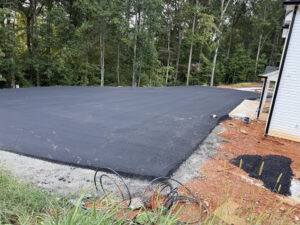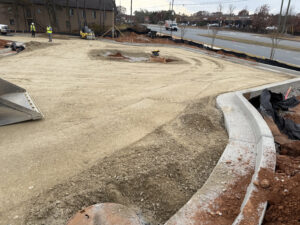
The road construction process turns plans, survey information, engineered details, and raw materials into a roadway that must safely support traffic and withstand changing weather. Although the finished pavement is the most visible part of the project, much of the work that determines performance happens before asphalt or concrete is placed. Clearing, grading, drainage, utility coordination, subgrade preparation, aggregate base construction, testing, and traffic management all contribute to the result.
Every project is different. A subdivision street, municipal roadway, commercial entrance, parking area, and highway improvement may use different designs, materials, inspection requirements, and construction sequences. This guide provides a practical overview of the typical phases and explains why coordination between them matters. For project-specific help, explore Askew & Sons’ roadway construction services in Metro Atlanta and North Georgia.
1. Preconstruction Review and Project Coordination
Construction begins with a careful review of the plans and existing conditions. The contractor, owner, engineer, surveyor, utility representatives, inspectors, and other project participants need a shared understanding of the scope. The team reviews roadway limits, elevations, drainage structures, utility conflicts, traffic requirements, material specifications, access restrictions, testing responsibilities, and the desired schedule.
A preconstruction meeting can identify unanswered questions before they become field delays. It should establish communication procedures, decision authority, submittal requirements, inspection notice periods, working hours, staging areas, and the process for documenting changes. Compare construction drawings with current site conditions because development, erosion, utility work, or adjacent activity may have changed the property since the original survey.
The planning phase also includes quantity review and procurement. Asphalt mix, aggregate, concrete, drainage structures, pipe, geotextiles, signs, and other products may require approval or scheduling. Identify long-lead items early so they don’t disrupt the sequence later.
2. Surveying, Layout, and Construction Controls
Survey layout transfers the design from the plans to the field. Surveyors establish control points, centerlines, offsets, elevations, slopes, drainage locations, and construction limits. Contractors use this information to guide excavation, fill placement, grading, base construction, and final pavement elevations.
Controls must be protected during construction. Heavy equipment, excavation, and material stockpiles can disturb stakes or benchmarks. When a control point is damaged or a field condition creates uncertainty, the correct response is to have the layout verified rather than estimate an elevation or alignment. Small layout errors can affect drainage, curb transitions, intersections, and tie-ins over a much larger area.
3. Erosion Control and Site Protection
Before widespread soil disturbance, install required erosion- and sediment-control measures. Depending on the site, these may include construction entrances, silt fence, inlet protection, check dams, sediment basins, temporary stabilization, diversion measures, and designated stockpile locations.
Controls are not a one-time installation. They must be monitored, maintained, and adjusted as grading changes the site. Construction entrances help reduce soil tracking onto public roads, while stabilization protects exposed areas from rainfall and runoff. A clean, organized site also supports safer equipment movement and more efficient production.
4. Clearing, Demolition, and Initial Earthwork
Clearing removes vegetation, unsuitable organic material, existing pavement, abandoned structures, and other items within the work limits. Materials must be handled and disposed of per project requirements. Clearly protect existing features designated to remain.
Earthwork then begins shaping the roadway corridor. The team excavates cut areas and places approved material in fill areas. Fill is generally installed in controlled lifts so the team can manage moisture and compaction. Large volumes require careful haul planning because truck routes, stockpile space, weather, and site access influence production.
Unexpected material may be encountered. Soft soil, buried debris, uncontrolled fill, rock, or groundwater can require additional evaluation. The team should document the location and condition, obtain direction when required, and agree on the corrective scope before covering the area.
5. Drainage and Utility Installation
Drainage and underground utilities are commonly installed before the pavement structure. Storm pipes, inlets, culverts, water lines, sanitary sewer, communications, and other systems may cross or run parallel to the roadway. Coordinating these elements before final grading helps avoid cutting new pavement later.
Drainage structures must match proposed elevations and slopes. Pipe bedding, trench backfill, compaction, connections, and outlets all affect performance. Poorly compacted utility trenches can settle and create depressions or cracking across the finished road. Inlets placed too high or low may prevent runoff from entering the system as intended.
The Georgia Department of Transportation’s Drainage Design Policy Manual illustrates the level of coordination required for transportation drainage. Visit our infrastructure improvement articles for more information about drainage and roadway systems.
6. Fine Grading and Subgrade Preparation
After major underground work is complete, grade the roadway to the elevations needed for the pavement section. The subgrade is shaped, moisture conditioned, and compacted. Proof rolling or other evaluation may be used to identify yielding or unstable areas.
Subgrade conditions can vary across a project. Soil that is too wet may move under equipment instead of compacting. Soil that is too dry may require moisture. Unsuitable areas may need undercutting, replacement, stabilization, or another approved treatment. Placing aggregate over an unstable subgrade hides the problem temporarily but does not create reliable support.
Fine grading must also preserve the slopes required for drainage. High or low areas at this stage can carry through the aggregate and pavement layers, making final corrections more difficult.
7. Aggregate Base Placement and Compaction
The aggregate base distributes loads, supports construction equipment, and provides a uniform platform for pavement. Place approved material at the specified thickness, grade it, moisture-condition it as needed, and compact it. Crews may build thicker sections in multiple lifts so compaction equipment can effectively treat the material.
Crews check line, grade, cross slope, thickness, and density as required. Protect the base from contamination by mud or construction debris and from damage caused by uncontrolled traffic. Address standing water before paving.
The Federal Highway Administration provides technical resources concerning pavement compaction and construction quality. The project specifications determine which tests, equipment, and acceptance standards apply.
8. Asphalt Paving
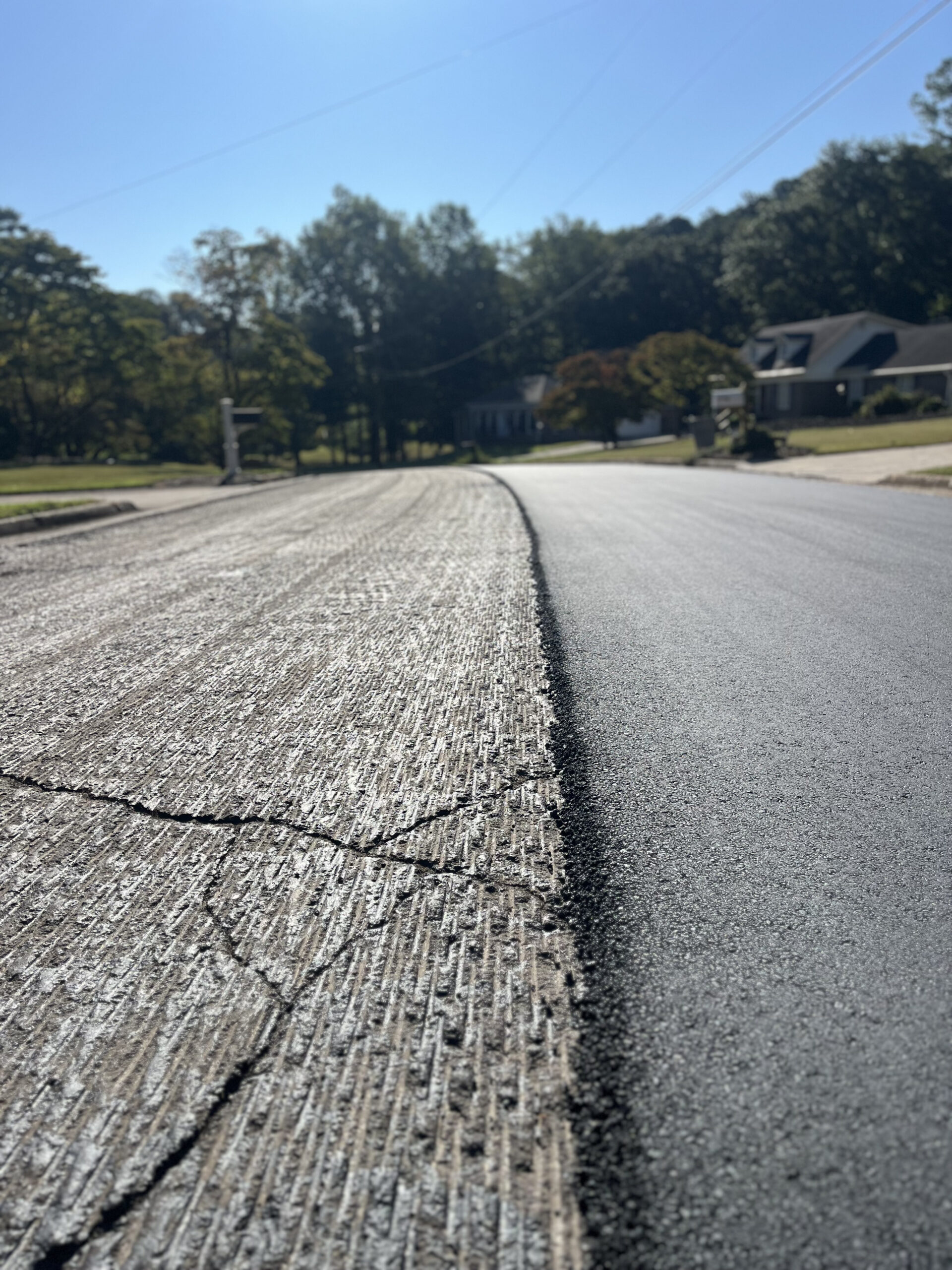
Asphalt paving typically involves material production, hauling, placement, compaction, and joint construction. The surface receiving asphalt must be properly prepared and accepted. Material temperature, weather, haul distance, paving speed, lift thickness, rolling pattern, and joint work can influence density and appearance.
Asphalt may be placed in multiple lifts, such as a base or binder course followed by a surface course. Each lift has a purpose within the pavement structure. Transitions at existing roads, driveways, utility structures, gutters, and bridges require attention so traffic moves smoothly and water drains properly.
Compaction begins while the mix is workable. Coordinate rolling operations with the paver to achieve density without displacement or surface defects. Explore our asphalt paving resources for more guidance about installation, repair, and maintenance.
9. Concrete Elements and Connections
Many roadway projects include concrete curb and gutter, sidewalks, aprons, islands, flumes, drainage structures, or pavement. Forming, reinforcement when specified, concrete placement, finishing, joint construction, and curing must be coordinated with adjacent grades and asphalt.
Concrete requires protection while it develops strength. Traffic, equipment, rapid moisture loss, unsuitable temperatures, or early loading can damage new work. Verify elevations at curb openings, ramps, inlets, and transitions before placement. Review our concrete paving articles for material comparisons and planning considerations.
10. Shoulders, Slopes, and Site Restoration
Pavement edges rely on appropriate support and drainage. Complete shoulders, curb, aggregate, or other edge treatments according to the design. Adjacent slopes are shaped and stabilized, disturbed property is restored, and temporary construction features are removed when no longer needed.
Restoration may include topsoil, seed, mulch, sod, landscaping repair, driveway connections, fence replacement, or cleanup. Completing these activities promptly reduces erosion and helps the roadway fit safely into the surrounding site.
11. Pavement Markings, Signs, and Final Traffic Features
Roadways may require striping, symbols, raised pavement markers, signs, guardrail, detectable warnings, or other traffic features. Markings depend on clean, properly cured surfaces and suitable weather. Temporary traffic control remains in place until the roadway is ready for its intended operation.
Review final features for visibility, placement, and consistency with the approved traffic plan. Intersections, pedestrian routes, school areas, and changing lane patterns deserve particular attention.
12. Testing, Inspection, and Final Documentation
Quality control occurs throughout construction, not only at the end. Testing and inspection may address soil and aggregate density, material properties, pavement thickness, asphalt temperature, concrete strength, elevations, drainage function, and visual workmanship. Include required hold points in the schedule so the next layer is not placed before concealed work is accepted.
Final review identifies incomplete work, damage, drainage concerns, cleanup needs, and documentation required for closeout. Plans may need record information showing field changes. Owners should retain relevant test reports, warranties, approvals, and maintenance guidance.
Common Causes of Road Construction Delays
- Unidentified utility conflicts or delayed relocation
- Unsuitable or saturated soil
- Rain and temperature limitations
- Late design decisions or incomplete approvals
- Material-production or delivery constraints
- Restricted site access or conflicting construction activity
- Inspection and testing availability
- Changes in traffic-control requirements
Not every delay can be avoided, but early planning, reliable communication, and a logical sequence reduce preventable disruption.
Road Construction Process FAQs
What is the most important phase of road construction?
No single phase can compensate for failures in another. Drainage, subgrade, aggregate base, pavement placement, and quality control function as a system. The supporting layers are especially important because they are difficult to correct after paving.
How long does the road construction process take?
Duration depends on project size, earthwork, utilities, drainage, traffic phasing, weather, inspections, and material availability. A contractor needs plans and site information before providing a reliable schedule.
Why is a road built in several layers?
Each layer distributes loads and contributes different performance characteristics. The soil, aggregate base, asphalt courses, or concrete section work together as an engineered pavement system.
Can roadway construction continue during rain?
Some activities may continue, but grading, compaction, base preparation, asphalt paving, and concrete work can be limited by rainfall, saturated material, temperature, or unsafe conditions.
When can traffic use new pavement?
The answer depends on the material and project conditions. Asphalt may accept traffic after adequate cooling and completion of required work. Concrete must develop sufficient strength and may require a longer closure. The project team should authorize opening.
Move Your Road Construction Project Forward
Successful roadway construction is the result of coordinated decisions from the first site review through final inspection. Askew & Sons brings practical field experience to roadway, asphalt, concrete, grading, and infrastructure work throughout Georgia. Review our project experience, or request a project consultation to discuss plans, schedules, and construction needs.