Asphalt vs. Concrete Driveways: How to Choose the Right Surface
Choosing between asphalt and concrete is not a matter of declaring one material universally better. Each can produce a durable, attractive driveway when the pavement system is designed for the property and installed over a properly prepared base. The better choice depends on drainage, soil, slope, traffic, appearance, budget, construction access, maintenance expectations, and how the surface will connect to a garage, street, sidewalk, or commercial entrance.
This comparison explains the practical differences between asphalt and concrete driveways for Georgia properties. It covers construction, cost drivers, climate response, maintenance, repair, appearance, drainage, usability, and questions to ask before accepting a proposal. The decision should also account for ownership plans and risk tolerance. A homeowner preparing for long-term use may prioritize lifecycle value and maintenance predictability, while someone coordinating a larger renovation may prioritize construction sequencing and future utility access. Local site conditions remain more important than broad claims about either material. Soil, runoff, shade, vegetation, driveway length, street connection, and the location of heavy turning movements can change the recommendation. Owners should also consider how repairs will look years later, whether future additions may require trenching, and whether the chosen finish can be maintained with locally available services. Written expectations help prevent misunderstandings: ask what normal aging will look like, which maintenance tasks belong to the owner, what conditions are excluded from warranty coverage, and what signs should trigger an inspection. A good material choice is therefore both technical and practical. It should suit the site, the budget, the desired appearance, and the owner’s willingness to maintain the surface over time.
What is an asphalt driveway?
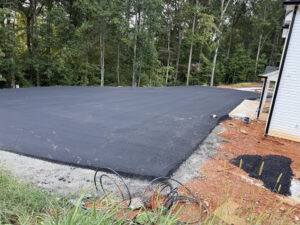
An asphalt driveway uses a compacted mixture of aggregate and asphalt binder placed over a prepared base. The exact pavement section depends on anticipated loads, subgrade conditions, drainage, and project requirements. Asphalt’s dark, continuous surface is familiar on roads and parking areas and can be installed efficiently when access, weather, and base preparation are suitable.
Asphalt has some flexibility, which can help it tolerate modest movement, but flexibility does not make it immune to failure. Poor drainage, weak base material, inadequate compaction, fuel exposure, oxidation, heavy point loads, and unsupported edges can cause cracking, depressions, raveling, and potholes.
What is a concrete driveway?
A concrete driveway is formed from cementitious concrete placed over a prepared foundation, finished, jointed, and cured. Reinforcement, thickness, joint layout, mix design, and base preparation should reflect the site and intended use. Concrete offers a light-colored, rigid surface and can support a range of textures and decorative treatments.
Concrete’s rigidity distributes loads differently from asphalt, but it can crack when soil moves, joints are poorly planned, curing is inadequate, loads exceed the design, or water undermines support. Cracking does not always mean total failure; location, width, displacement, and cause determine whether sealing, repair, slab replacement, or broader reconstruction is appropriate.
Which material costs less?
Asphalt often has a lower initial price for a comparable straightforward driveway, while concrete commonly requires a higher upfront investment. That generalization is not a substitute for site-specific estimates. Excavation, demolition, hauling, base repair, drainage, thickness, reinforcement, access, finish, mobilization, material availability, and project size can outweigh the basic material difference.
Compare proposals by scope rather than total price alone. One contractor may include removal of failed base, grading, drainage correction, and edge support while another assumes the existing foundation is acceptable. A low bid that omits necessary preparation can become the expensive choice if the new surface fails prematurely.
How do asphalt and concrete handle Georgia weather?
Georgia driveways experience strong sunlight, long hot periods, heavy rain, humidity, and occasional freezing temperatures. Asphalt absorbs heat and can soften under extreme surface temperatures, especially when new or subjected to concentrated loads. Over time, ultraviolet exposure and oxidation can dry the binder and make the surface more brittle.
Concrete generally stays lighter and may feel cooler at the surface, but it is sensitive to proper placement and curing and can be affected by moisture, movement, and freeze-thaw exposure. Drainage remains essential for both. Climate performance depends heavily on design and workmanship, not merely material name.
Which driveway is faster to install and use?
Asphalt placement can often be completed relatively quickly after excavation, grading, and base work, but the contractor must specify when vehicles can return. Temperature, mix, thickness, compaction, and weather influence that timing. The surface may remain more vulnerable to turning tires, kickstands, trailers, and concentrated loads while it is new and hot.
Concrete normally requires forming, placement, finishing, jointing, and a protected curing period. Opening it to traffic too early can compromise performance. The project schedule should clearly state preparation days, placement conditions, curing or cooling requirements, pedestrian access, and the date normal vehicle use can resume.
What maintenance does each material need?
Asphalt maintenance centers on drainage, cleaning, vegetation control, crack sealing, edge support, localized repairs, and selective protective treatments. Sealcoating may be appropriate for certain surfaces after adequate curing, but it should not be presented as a repair for structural failure.
Concrete maintenance includes cleaning, protecting joints, sealing compatible cracks or joints where recommended, avoiding damaging chemicals, and addressing settlement or spalling. Decorative concrete may require additional care to preserve color or sealer. Neither material is maintenance-free, and both benefit from early attention to drainage and movement.
Which is easier to repair?
Asphalt repairs can blend functionally into an existing surface, although color and texture differences may remain. Patching, milling, edge reconstruction, and overlays can be useful when the surrounding pavement and base are suitable. Repeated failure in the same location usually indicates that the cause has not been corrected.
Concrete repairs can range from crack or joint treatment to partial-depth repair, slab lifting in appropriate situations, or full slab replacement. A repaired area may remain visually noticeable. Matching an aged color or decorative finish can be difficult, so owners should discuss both structural result and appearance before work begins.
How do appearance and property style affect the choice?
Asphalt provides a dark, uniform appearance that works well with long drives, road-like approaches, commercial settings, and broad paved areas. Concrete provides a brighter look and more options for borders, scoring, exposed aggregate, color, or texture. Decorative choices add cost and require appropriate installation and maintenance.
Consider how the driveway relates to the building, landscaping, walkway, curb, and neighborhood. Appearance should not override drainage or structural needs, but it can help break a tie when both pavement systems are technically suitable.
Which is better for heavy vehicles?
Either material can be designed for heavier traffic, but a standard residential driveway should not be assumed to support repeated construction trucks, large delivery vehicles, recreational vehicles, or commercial equipment. Performance depends on subgrade stability, base thickness, pavement thickness, reinforcement where applicable, edge support, and turning movements.
Tell the contractor about the heaviest expected vehicles and where they will park or turn. Concentrated loads near edges, utility trenches, or soft areas can cause damage even when the main driveway appears strong. Designing for actual use is more reliable than choosing material based on reputation alone.
What about drainage and steep slopes?
Both asphalt and concrete can serve sloped properties, but grades, surface texture, runoff speed, erosion, winter conditions, and transitions require careful planning. Water must be directed to an appropriate outlet without creating hazards, damaging neighboring property, or overwhelming landscaping and drainage structures.
Concrete can be formed with defined joints and drainage features, while asphalt offers a continuous surface shaped during grading and compaction. The contractor should verify elevations before placement. Correcting a drainage mistake after paving is usually more disruptive than planning the grade properly at the start.
How should you decide?
Start with a site evaluation, then identify priorities: initial budget, desired appearance, maintenance tolerance, traffic, project schedule, and long-term plans. Ask for alternatives when both systems are feasible. A responsible contractor should explain why a pavement section fits the soil, drainage, and use rather than simply promoting one material.
Review written details for removal, excavation, base material, compaction, thickness, reinforcement, joints, transitions, drainage, cleanup, access, and warranty terms. Confirm which quantities are estimates and how unforeseen soft areas will be handled. The quality of preparation and installation often matters more than the material debate.
Frequently Asked Questions
Is asphalt always cheaper than concrete?
Often, but not always. Site preparation, access, drainage, demolition, dimensions, finish, reinforcement, and local material conditions determine the actual price.
Does asphalt need sealcoating?
Some asphalt surfaces benefit from an appropriate coating after curing and evaluation. It is optional protection, not a substitute for crack repair, drainage correction, or base reconstruction.
Does concrete always crack?
Concrete is commonly jointed to manage where shrinkage and movement occur. Cracks can still develop, but good design, preparation, placement, curing, and jointing reduce avoidable problems.
Can I put asphalt over concrete or concrete over asphalt?
Sometimes existing pavement can be incorporated, but only after evaluating stability, elevations, drainage, joints, and expected movement. Removal may be the more reliable option.
Which material lasts longer?
Concrete is often associated with a longer potential service life, but actual results depend on the entire pavement system, environment, loading, installation quality, and maintenance.
Before choosing a surface, property owners should also discuss staging, access, maintenance records, and future changes to the site. A planned building addition, utility trench, gate, landscape redesign, or change in vehicle use can affect material selection and construction sequence. When both asphalt and concrete are technically suitable, request written alternatives that use comparable dimensions and preparation. That comparison makes the tradeoffs in initial cost, appearance, maintenance, repair visibility, and project timing much easier to evaluate. Askew & Sons evaluates paving, concrete, grading, and drainage needs across North Georgia. Learn about our services, compare completed projects, or request a site-specific proposal.