Driveway Paving Costs and Process: What to Expect Before Construction
A driveway estimate is more than a price for asphalt or concrete. The finished surface depends on measurements, access, demolition, excavation, soil, drainage, base preparation, pavement thickness, transitions, material delivery, labor, equipment, and site restoration. Understanding the process helps property owners compare proposals and avoid assumptions that lead to change orders or premature failure.
This guide explains the stages of driveway paving, the factors that affect cost, the decisions owners should make before work begins, and the questions that produce a clearer proposal. It applies to new driveways and replacement projects, although every property requires a site-specific plan.
What determines driveway paving cost?
Area is important, but square footage alone is not enough. A small project with difficult access, extensive demolition, hand work, drainage structures, or long equipment travel can cost more per square foot than a large open site. Material thickness and base quantities should reflect traffic and soil conditions rather than a universal package.
Other cost drivers include disposal fees, unsuitable soil, rock, tree roots, utility conflicts, grading, culverts, curb work, concrete reinforcement, decorative finishes, asphalt mix and lift requirements, mobilization, permits, traffic control, and restoration. Ask which conditions are included and which will be priced separately.
Step 1: Site evaluation and measurements
A contractor should inspect access, dimensions, slope, drainage, pavement condition, edges, structures, utilities, and anticipated vehicles. Measurements support material quantities, but the evaluation should also identify constraints such as narrow gates, overhead lines, septic systems, irrigation, low branches, weak bridges, or surfaces that cannot carry heavy equipment.
Discuss how the driveway is used today and how it may be used later. A pavement designed only for passenger cars may not be suitable for regular delivery trucks, trailers, recreational vehicles, construction equipment, or commercial traffic. Turning and parking locations matter because repeated slow turns and concentrated loads stress pavement.
Step 2: Define drainage before selecting elevations
The surface should direct runoff to an appropriate outlet while protecting buildings, neighboring property, landscaping, and public infrastructure. Existing ponding, erosion, wet shoulders, damaged culverts, and concentrated downspout flow should be addressed in the design.
Establishing finished elevations is especially important at garages, sidewalks, aprons, curbs, gates, drains, and road connections. Adding thickness without checking these points can trap water or create trip and vehicle-clearance problems. The contractor should explain whether the project includes regrading, milling, drainage structures, or shoulder work.
Step 3: Permits, utilities, and site preparation
Permit and right-of-way requirements vary by jurisdiction and project. Work near a public road, sidewalk, curb, drainage system, or easement may require approval. Utility locating should occur before excavation. Private systems such as irrigation, lighting, septic components, invisible fences, and privately installed lines may require separate identification by the owner.
Move vehicles, trailers, planters, and personal property before mobilization. Confirm access for residents, deliveries, emergency needs, pets, and waste collection. Protect items that may be affected by dust, vibration, or equipment. A written preconstruction plan reduces confusion once demolition begins.
Step 4: Remove failed pavement and unsuitable material
For replacement, crews remove existing asphalt or concrete and haul it to an appropriate facility. The exposed base and subgrade can then be evaluated. Soft, saturated, contaminated, or organic material may need to be removed. The required depth may not be fully visible during the estimate, which is why proposals should explain allowances or unit pricing.
Leaving unstable material beneath a new driveway can reproduce old problems. At the same time, unnecessary excavation adds cost and disturbance. The goal is to reach and create reliable support based on actual field conditions.
Step 5: Build and compact the base
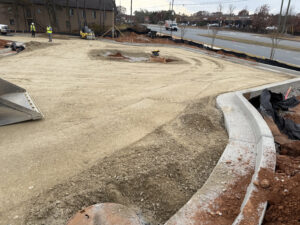
The base distributes loads and supports the pavement. Suitable aggregate is placed at appropriate depth and compacted, often in controlled lifts rather than one thick loose layer. Moisture and subgrade conditions affect compaction. Edges, utility trenches, and filled areas deserve special attention.
A beautiful surface cannot compensate for a weak foundation. Ask what base work is included, how additional soft areas are authorized, and how grades will be checked before paving. Base preparation is one of the least visible but most important parts of the project.
Step 6: Place asphalt or concrete
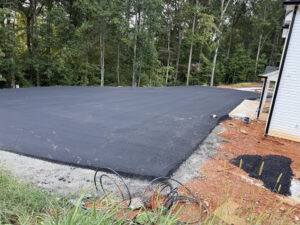
For asphalt, mix is delivered hot, spread to planned elevations, and compacted with suitable equipment. Complex shapes, small areas, edges, and transitions may require hand work. Weather and haul distance influence placement. The proposal should identify the intended compacted thickness and whether more than one lift is used.
For concrete, crews set forms, place reinforcement where specified, deliver and consolidate concrete, finish the surface, install joints, and begin curing protection. Mix selection, placement conditions, finishing, joint timing, and curing all influence performance. Decorative finishes add steps and should be described clearly.
Step 7: Finish edges, transitions, and surrounding areas
Edges need support and a clean connection to adjacent grades. Aprons, sidewalks, garage slabs, curbs, and existing pavement should transition without trapping water or creating abrupt bumps. Disturbed soil may require grading, seed, sod, stone, or other restoration depending on the contract.
Review drainage after construction, preferably during rainfall or with an agreed test where practical. Minor surface texture differences are normal, but water should generally follow the intended path. Report concerns promptly while crews and project information are available.
When can vehicles use the new driveway?
Opening time depends on material, weather, design, thickness, curing or cooling, and vehicle weight. Follow the contractor’s written instructions rather than a generic rule. Concrete requires protected curing, while fresh asphalt needs time to cool and remains more susceptible to scuffing or indentation during hot conditions.
Avoid sharp stationary turns, narrow kickstands, heavy trailers, dumpsters, and concentrated loads until the contractor says the pavement is ready. Plan parking alternatives before construction so no one is forced to use the surface early.
How estimates should describe asphalt thickness
Asphalt thickness can be stated loose or compacted, and those values are not interchangeable. Ask for the intended compacted thickness and mix information relevant to the project. If multiple lifts are proposed, the scope should distinguish the base or binder course from the surface course.
More thickness is not automatically a cure for poor drainage or weak soil. The pavement section must work as a system. A clear proposal connects subgrade, base, asphalt, traffic, and site conditions.
How estimates should describe concrete work
Concrete proposals should address slab thickness, base preparation, reinforcement if used, mix requirements, joint type and layout, finish, slope, curing, edges, and transitions. Decorative color, stamping, exposed aggregate, or sealers should have sample and maintenance expectations.
Reinforcement can help hold cracked sections together but does not eliminate the need for proper joints, support, drainage, and curing. Ask the contractor to explain the purpose of each specification instead of assuming a single feature guarantees performance.
How to compare two driveway bids
Create a side-by-side scope comparison. Confirm dimensions, removal, excavation, base material, quantities, compaction, pavement thickness, drainage, joints, reinforcement, transitions, cleanup, restoration, traffic control, permits, schedule, payment terms, exclusions, and warranty. Resolve obvious differences before treating prices as comparable.
Ask who will perform the work, whether subcontractors are involved, how changes are approved, and what documentation you will receive. Verify appropriate licensing, insurance, references, and local requirements. Be cautious when a proposal pressures immediate acceptance or cannot explain preparation.
Ways to control cost responsibly
Plan the project before deterioration becomes an emergency. Combine compatible work when mobilization savings are real, simplify decorative features, maintain straightforward geometry where practical, and provide clear access. Correct drainage at the same time rather than paying to repair water-related damage later.
Do not reduce cost by removing essential base preparation, thickness, drainage, joints, or curing. Ask for alternate scopes with explained tradeoffs. A contractor may be able to phase work or present asphalt and concrete options without compromising the core pavement system.
Questions to ask before signing
Ask what problem the proposed scope solves, what remains unresolved, and why the chosen material suits the site. Confirm start assumptions, duration, weather delays, access, opening time, payment schedule, cleanup, warranty, and the procedure for hidden conditions.
Request a drawing or marked photograph when drainage, dimensions, or repair limits are complex. Written clarity protects both parties and gives the crew a shared understanding of the intended result.
Frequently Asked Questions
Can I get an accurate driveway price over the phone?
A rough range may be possible with dimensions and photos, but reliable pricing usually requires a site visit to evaluate access, drainage, base, demolition, transitions, and traffic.
Why do two paving estimates differ so much?
They may include different areas, thicknesses, preparation, drainage, materials, restoration, or assumptions. Compare written scope before comparing totals.
Is the cheapest driveway bid a bad choice?
Not automatically, but a low price is risky when essential scope is missing or vague. Ask the contractor to explain quantities, preparation, and exclusions.
Should paving wait until after other construction?
Usually heavy construction, utility trenching, and major landscaping should occur before the finished driveway when sequencing allows. Coordinate temporary access and final paving.
What happens if crews find soft soil?
The contract should explain how unsuitable material is measured, approved, removed, and replaced. Hidden conditions can change cost, but the process should not be a surprise.
Planning a driveway or paving project in North Georgia? Explore Askew & Sons’ paving, concrete, grading, and site-work services, view our project portfolio, or request a detailed proposal.